🤖 AI-summarized topic discussion is available here.
AI agents or Agents are transforming how we interact with technology, moving beyond simple conversational interfaces to dynamic software entities that can perform tasks autonomously. These agents combine the power of large language models (LLMs) with the ability to use tools, access memory, and make decisions. This article will explore the concept of AI agents, their technical features and requirements, and how to effectively build one using Langflow.
What are Agents?
At its core, an AI agent is an application designed to achieve a goal by observing its environment and taking actions using available tools. Unlike traditional software, AI agents can reason, plan, and adapt to new information without human intervention. This capability is driven by a combination of three key components:
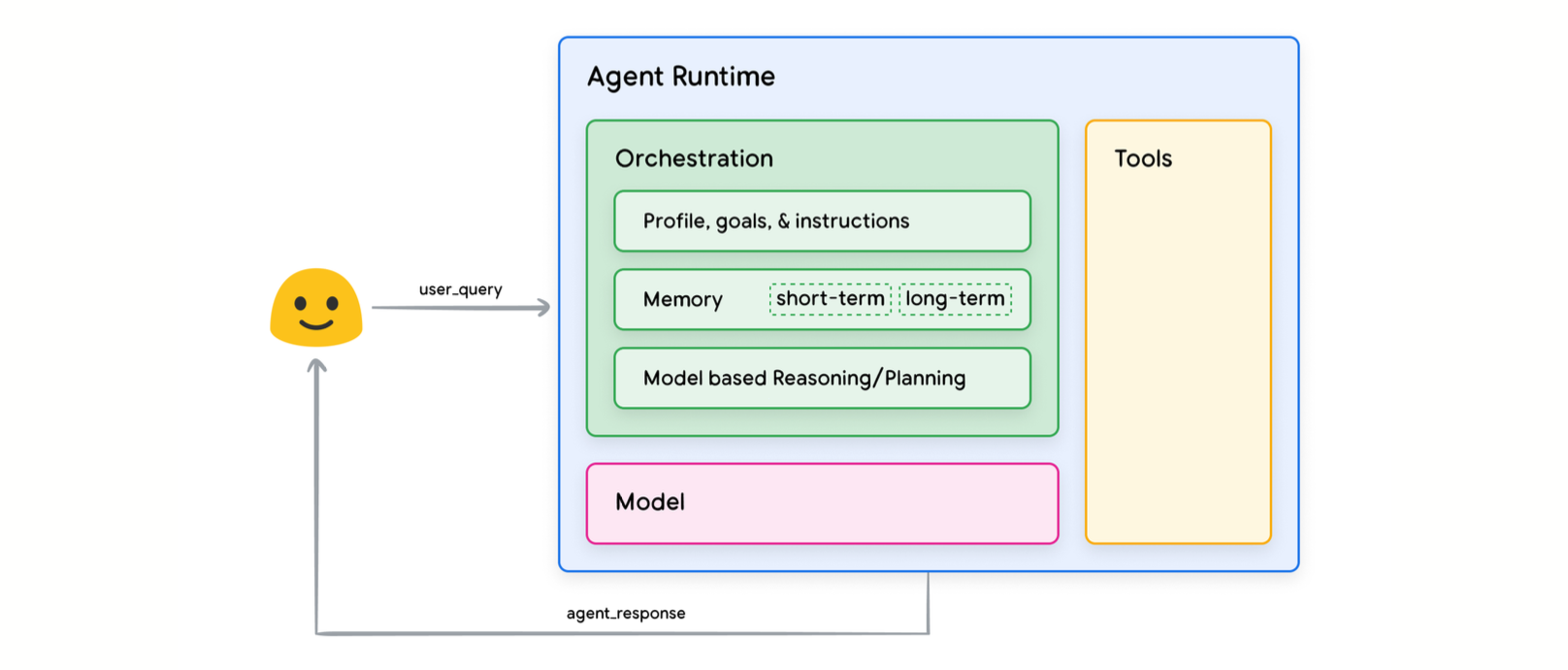
Source:Agents whitepaper by Google
- The Model: The language model serves as the decision-maker, utilizing reasoning and logic frameworks to process information. It can be a general-purpose model, a multimodal model, or a fine-tuned model depending on the specific application.
- Tools: These are the means by which the agent interacts with the external world. They can be APIs, functions, data stores, or custom code that enables agents to perform specific tasks. Tools enable agents to access real-time information, perform calculations, and interact with external services.
- Orchestration Layer: This layer defines the cyclical process by which the agent takes in information, reasons about it, and decides on its next action. It manages the agent's memory, state, and planning to achieve its goal.
Agents are not just models, they are complete systems that use models, tools, and an orchestration layer to perform tasks.
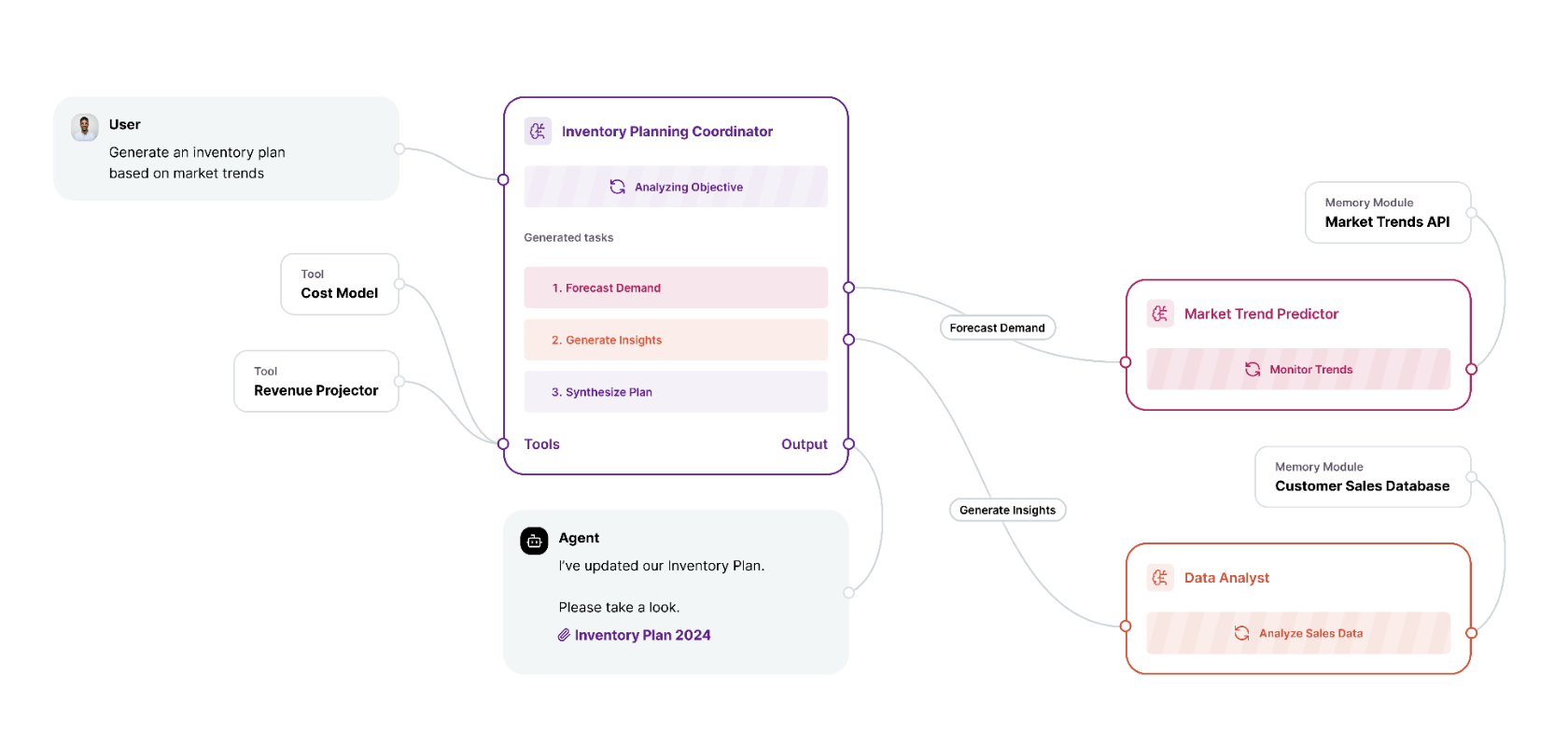
Source:Systems of Automation whitepaper by Datastax
Key Technical Features and Requirements of Agents
Several features and requirements are essential for effective AI agents:
- Tool Use: The agent must be able to utilize external functions, APIs, or tools to perform specific tasks. This can include making web requests, accessing databases, or performing calculations.
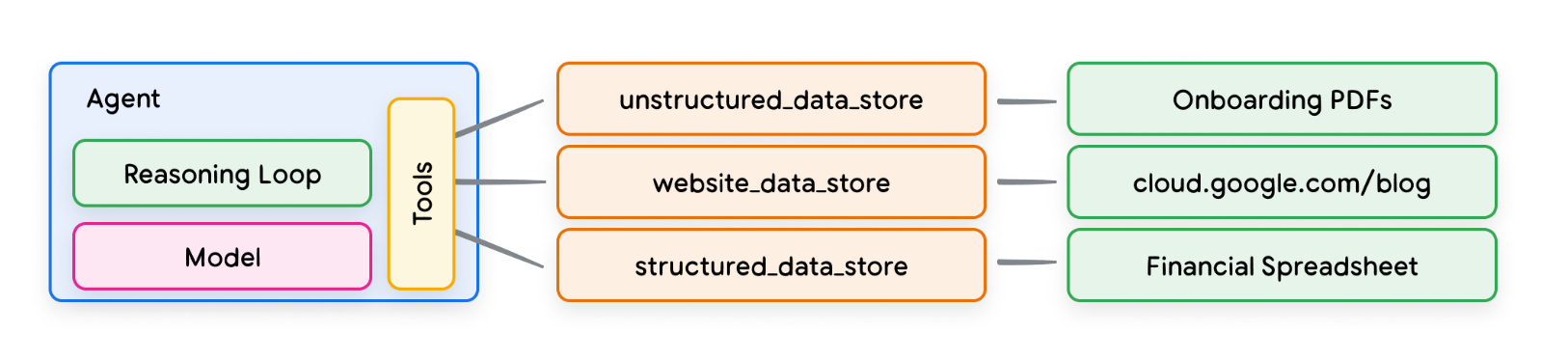
Source:Agents whitepaper by Google
- Decision-Making: The agent needs the ability to evaluate information and select the most appropriate action to achieve its objectives. This requires analyzing context and weighing possible outcomes.
- Planning: Agents must be able to formulate actions or strategies to achieve a specific goal. This involves reasoning about the available context and predicting the outcomes of actions.
- Memory: Agents should have the capacity to remember previous interactions and use that context in current or future interactions.
- Adaptability: Agents should be capable of adjusting to new information and changing business needs.
- Reasoning: Agents use reasoning frameworks to process information and guide actions. Popular frameworks include ReAct, Chain-of-Thought (CoT), and Tree-of-Thoughts (ToT).
How to Build an Agent with Langflow
Langflow is a powerful platform for building AI agents with a user-friendly, drag-and-drop interface. It simplifies the process of creating agentic workflows by providing tools and components to connect LLMs with various tools and data sources. Here’s how you can build an AI agent using Langflow:
-
Set up the Agent Component: Start by dragging and dropping an agent component from the sidebar onto the canvas. You can select the model provider (e.g., OpenAI, DeepSeek) and the specific model you want to use.
-
Customize Agent Instructions: Provide clear instructions to the agent about its role and goals. This can be done directly in the component or by attaching a text box with instructions.
-
Add Tools: Drag and drop the required tools from the sidebar, such as a calculator, a URL fetcher, or a database connector. Connect the tools to the agent component. Ensure each tool has a description, enabling the LLM to determine which tool to use for a particular task.
-
Connect Chat Input and Output: Add a chat input and a chat output component to the canvas to communicate with the agent. Connect the chat input to the agent’s input and the agent's response to the chat output.
-
Test the Agent: Use the playground to interact with the agent and test its functionality. Observe the intermediate steps to see how the agent makes decisions and uses tools. You can edit previous messages to see how the agent's behavior changes with different inputs.
Key Langflow Features for Building AI Agents:
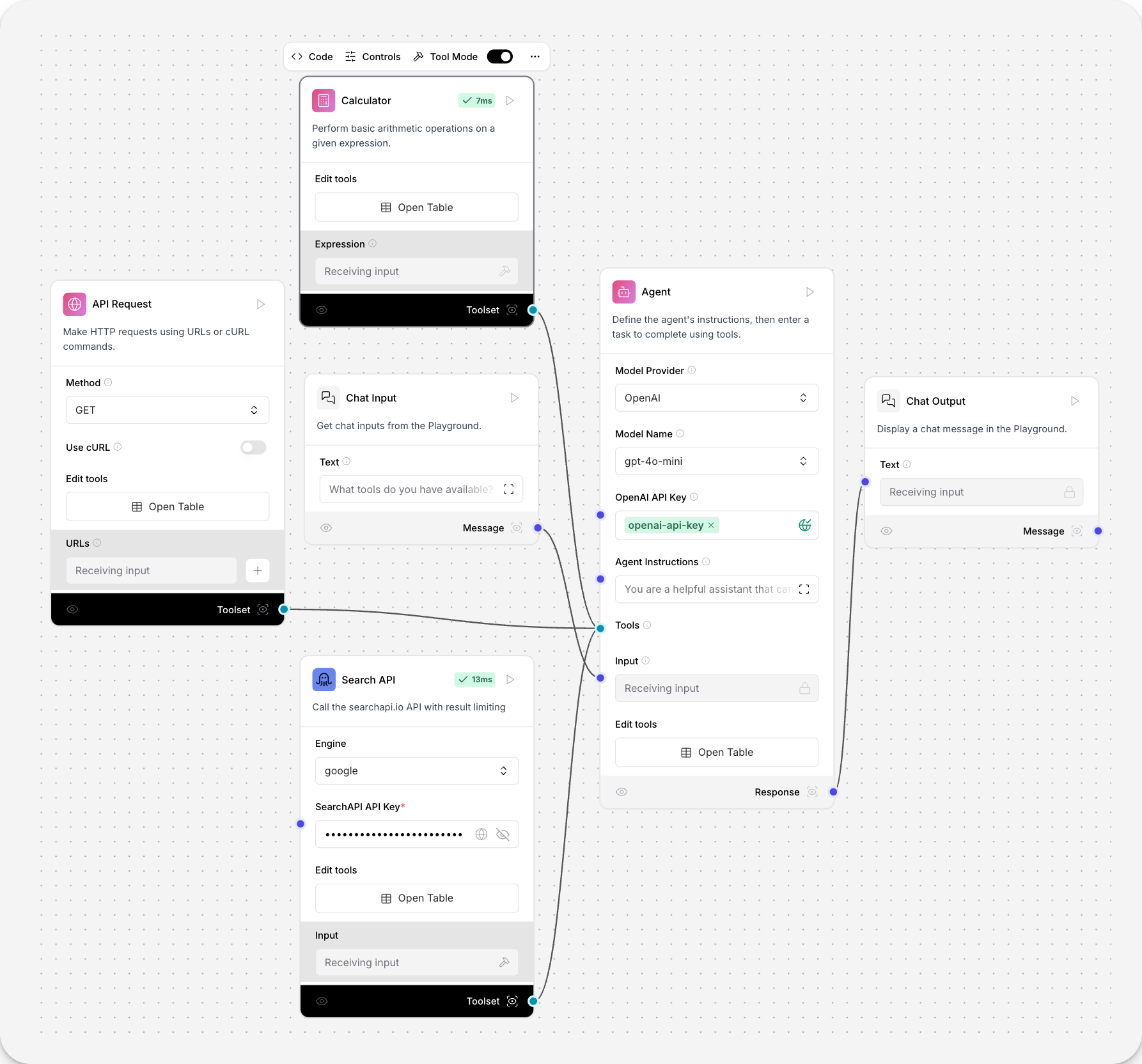
Source:Langflow Docs
- Tool Mode: Any component in Langflow can be converted into a tool, enabling the agent to control it. This means that not only can a URL fetcher be used as a tool, but an entire agent flow can be used as a tool by another agent.
- Memory Management: Langflow provides components for managing message history, allowing the agent to remember previous interactions. You can inspect the message history and also store messages in specific ways for different purposes.
- Custom Components: You can create custom components with Python code and convert them into tools. This allows you to extend the agent's capabilities to meet specific needs.
- Multi-Agent Orchestration: Langflow supports the creation of multi-agent systems where one agent can call other agents as tools. This enables complex, hierarchical workflows.
- Integration with Vector Databases: You can connect your agent to vector databases, which facilitates retrieval-augmented generation (RAG) applications. You can use a retriever tool or directly connect your database as a tool for the agent.
Conclusion
AI agents are set to transform many aspects of automation and problem-solving. By combining the power of LLMs with a variety of tools, these agents can perform tasks more dynamically, efficiently, and effectively than traditional systems. Platforms like Langflow are making it easier than ever to build and deploy these intelligent agents. As agent technology continues to evolve, we can expect even more sophisticated and versatile applications that redefine how we interact with the digital world.
References
- DataStax, "Systems of Automation"
- Google, "Agents"
- Langflow YouTube channel, "AI Agent Basics with Langflow"
- Langflow YouTube channel, "Build an Agentic RAG AI app with Langflow"
- DataStax Developers YouTube channel, "How to Build a Basic Agentic Workflow using DataStax Langflow"
- Langflow YouTube channel, "eepSeek-R1: Building RAG Applications in Langflow"